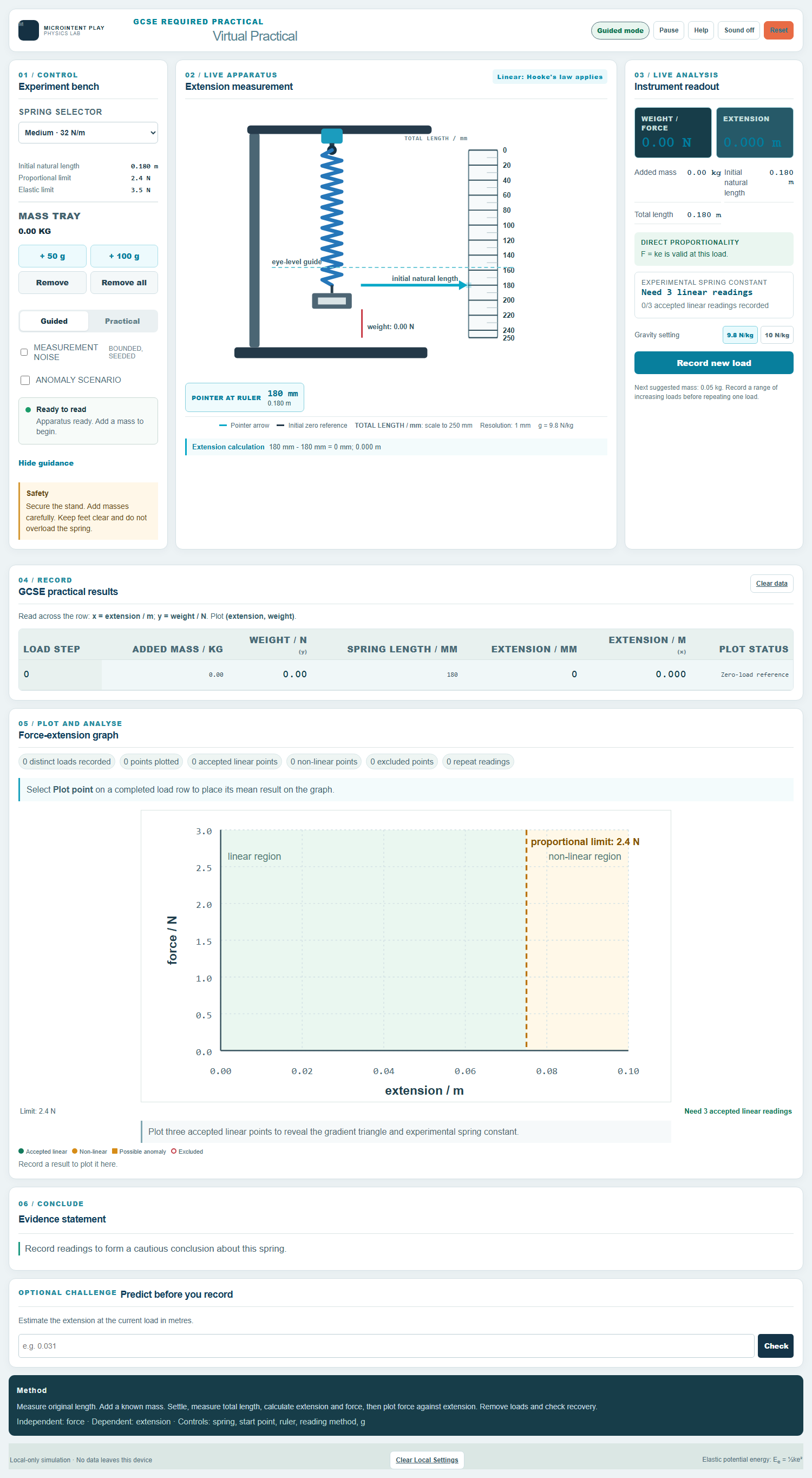
Hooke's Law Virtual Practical
Operate a virtual spring experiment, collect load-by-load measurements, plot a force-extension graph and calculate the spring constant.
- Force, weight and extension
- Hooke's law
- Required-practical measurements
Virtual practicals
Choose an investigation, operate the apparatus, collect measurements and turn the evidence into a graph and a conclusion. Written for GCSE Physics practical work and suitable for lesson demonstration, revision or independent study.
Operate a virtual spring experiment, collect load-by-load measurements, plot a force-extension graph and calculate the spring constant.
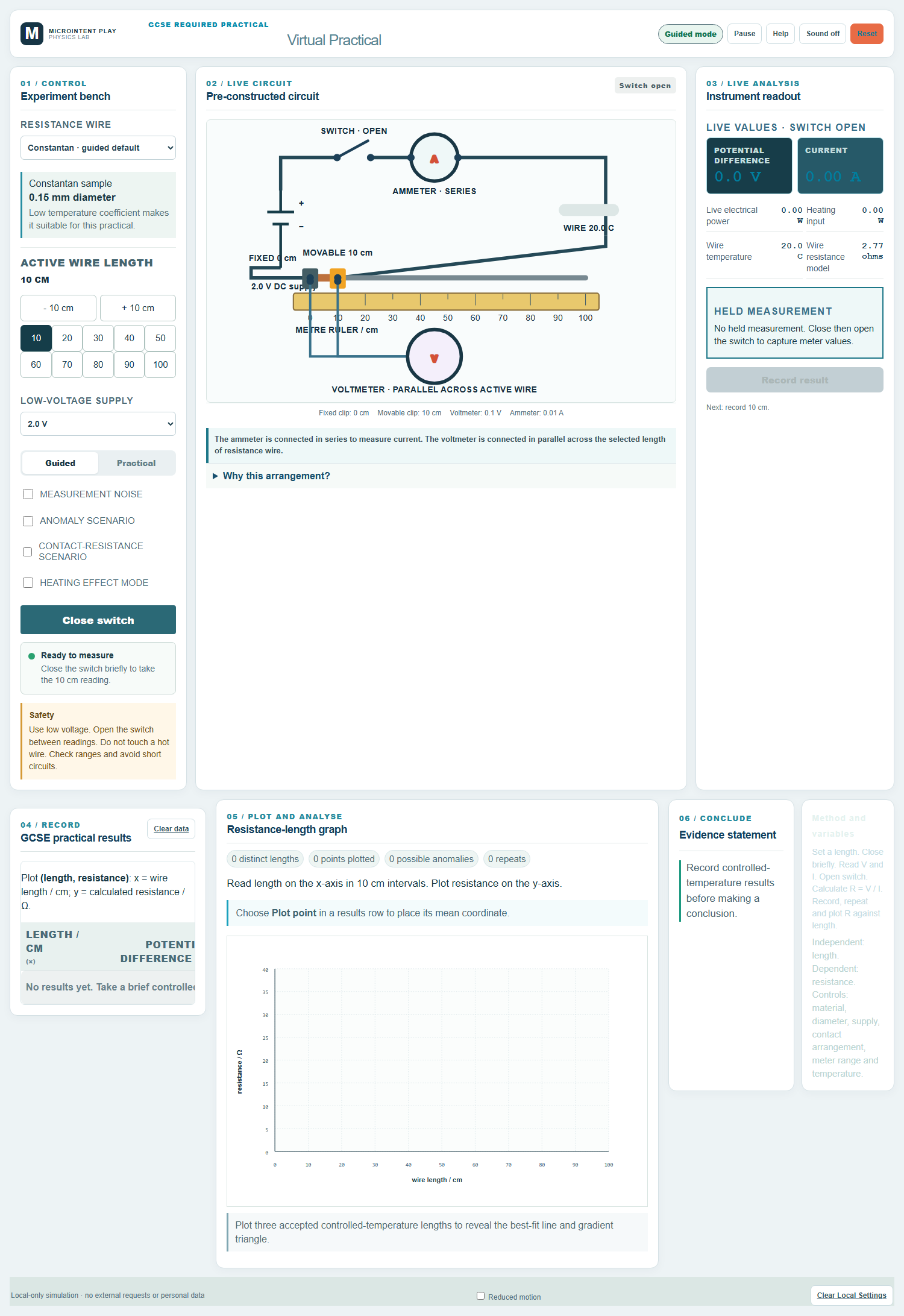
Investigate how the resistance of a wire changes with length using a pre-constructed circuit, real meter readings and a full results-to-graph workflow.
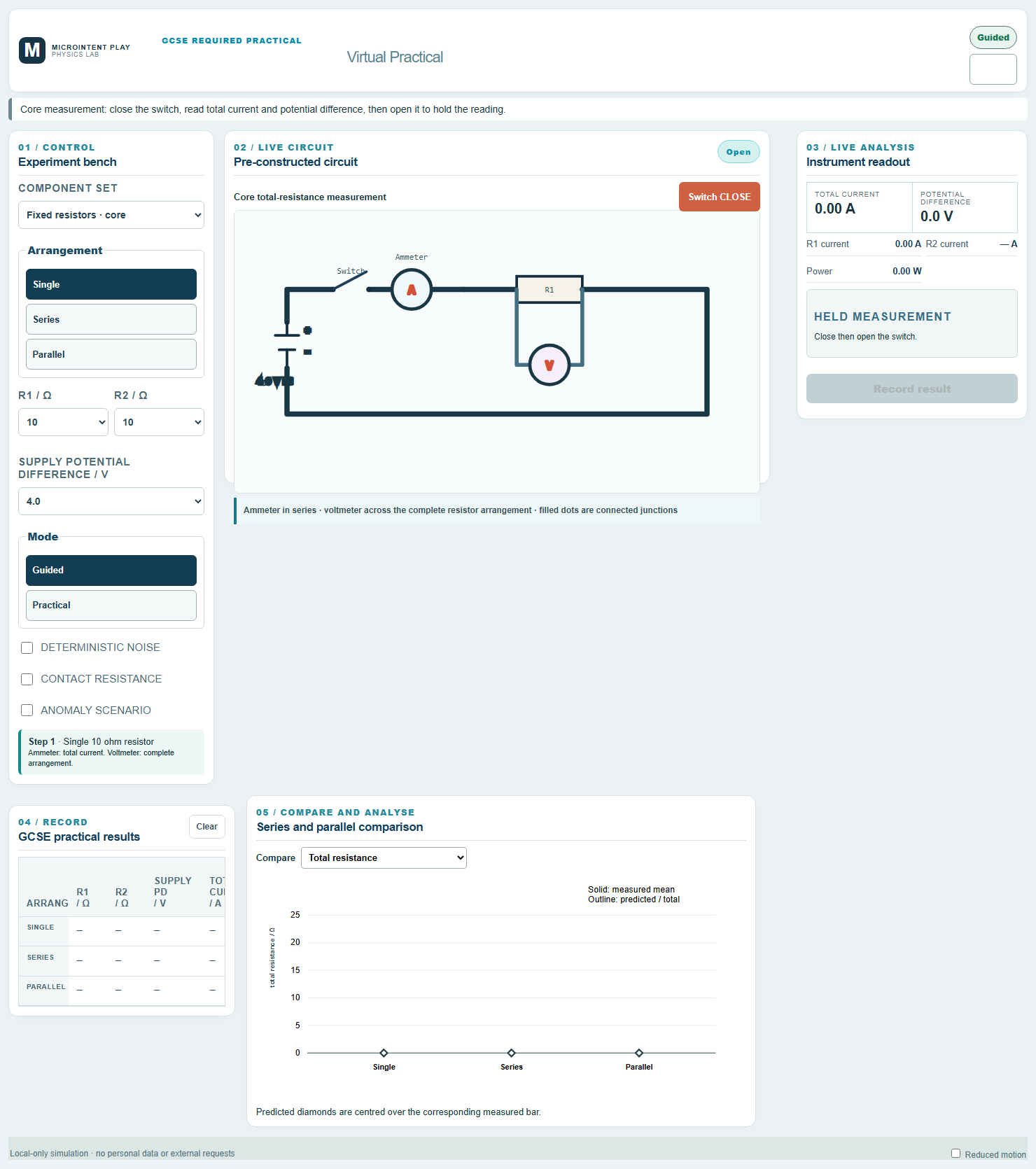
Build evidence from single, series and parallel circuits by comparing current, potential difference and total resistance.
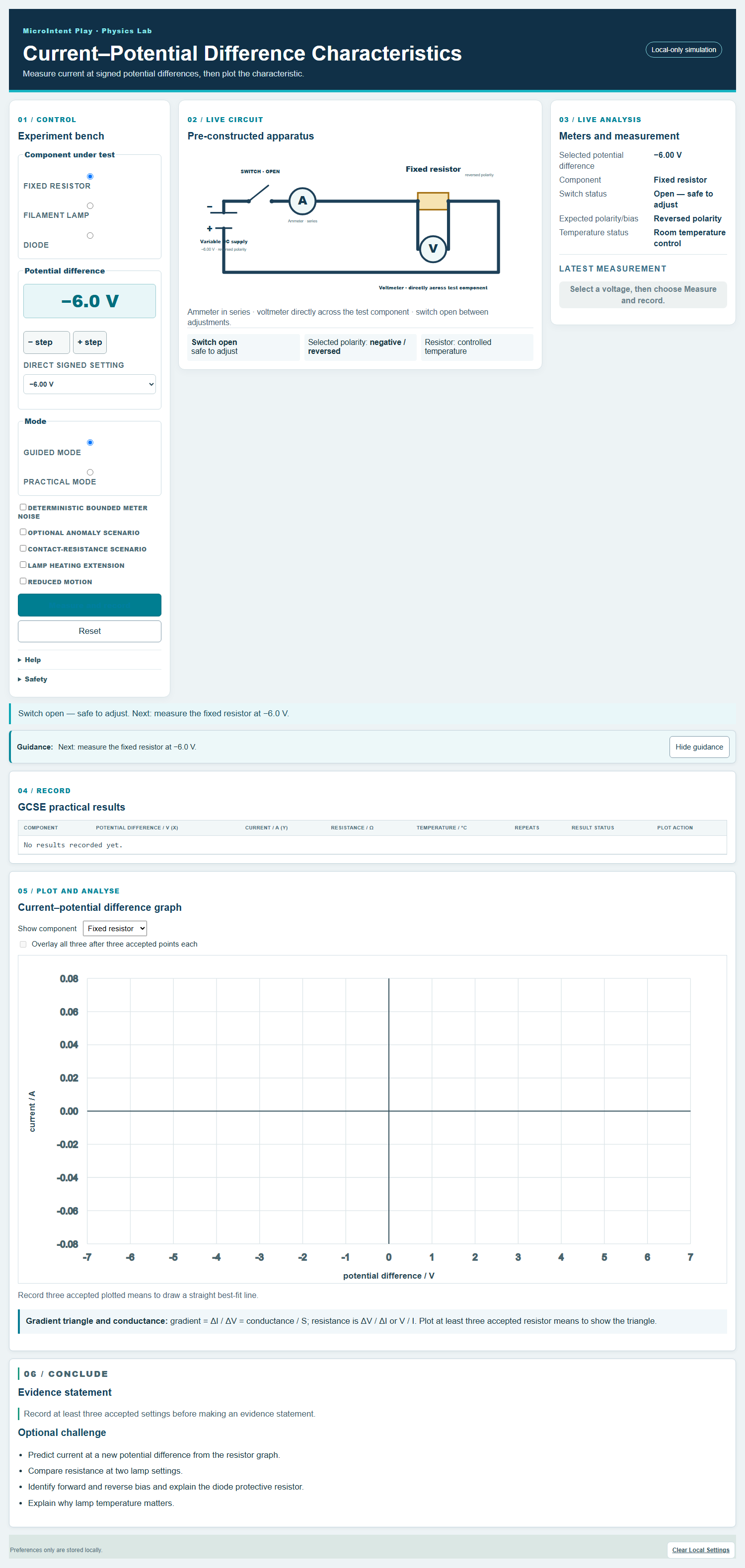
Measure and plot current–potential difference characteristics for a fixed resistor, filament lamp and diode using a correctly connected circuit.
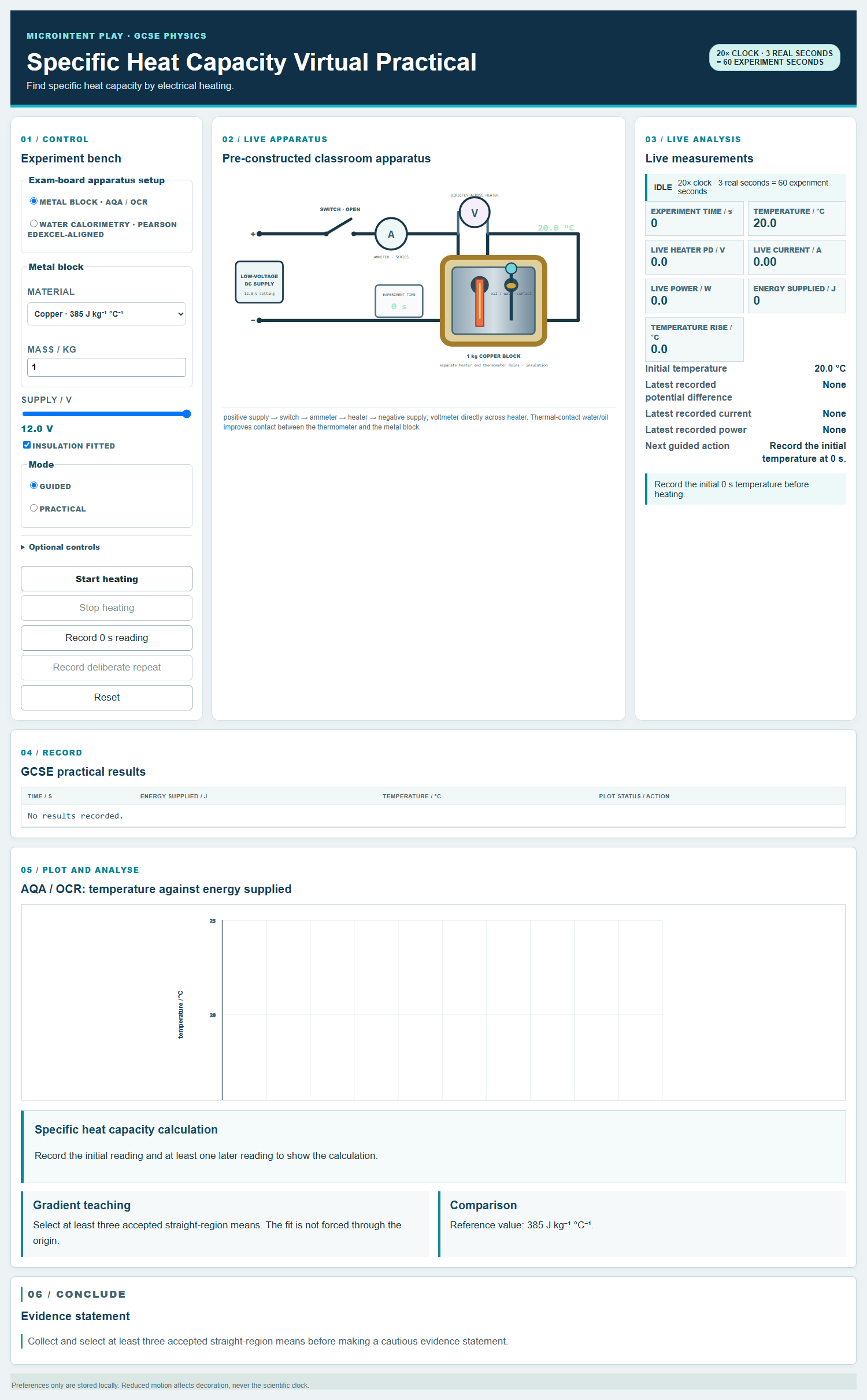
Heat a metal block or insulated water calorimeter, record electrical energy and temperature change, and determine specific heat capacity from a graph.
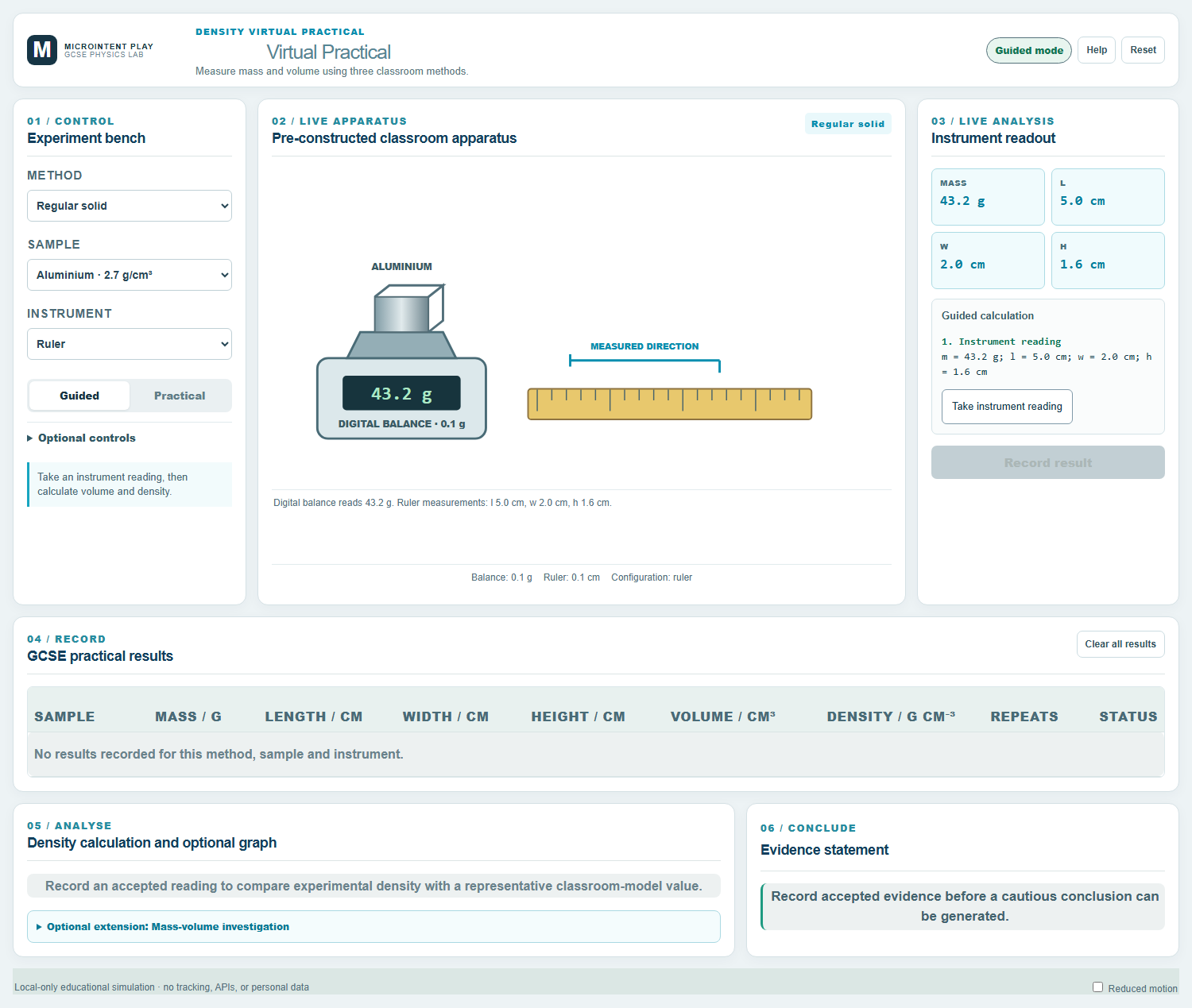
Measure mass and volume using regular solids, water displacement and mass difference, then calculate density from your results.
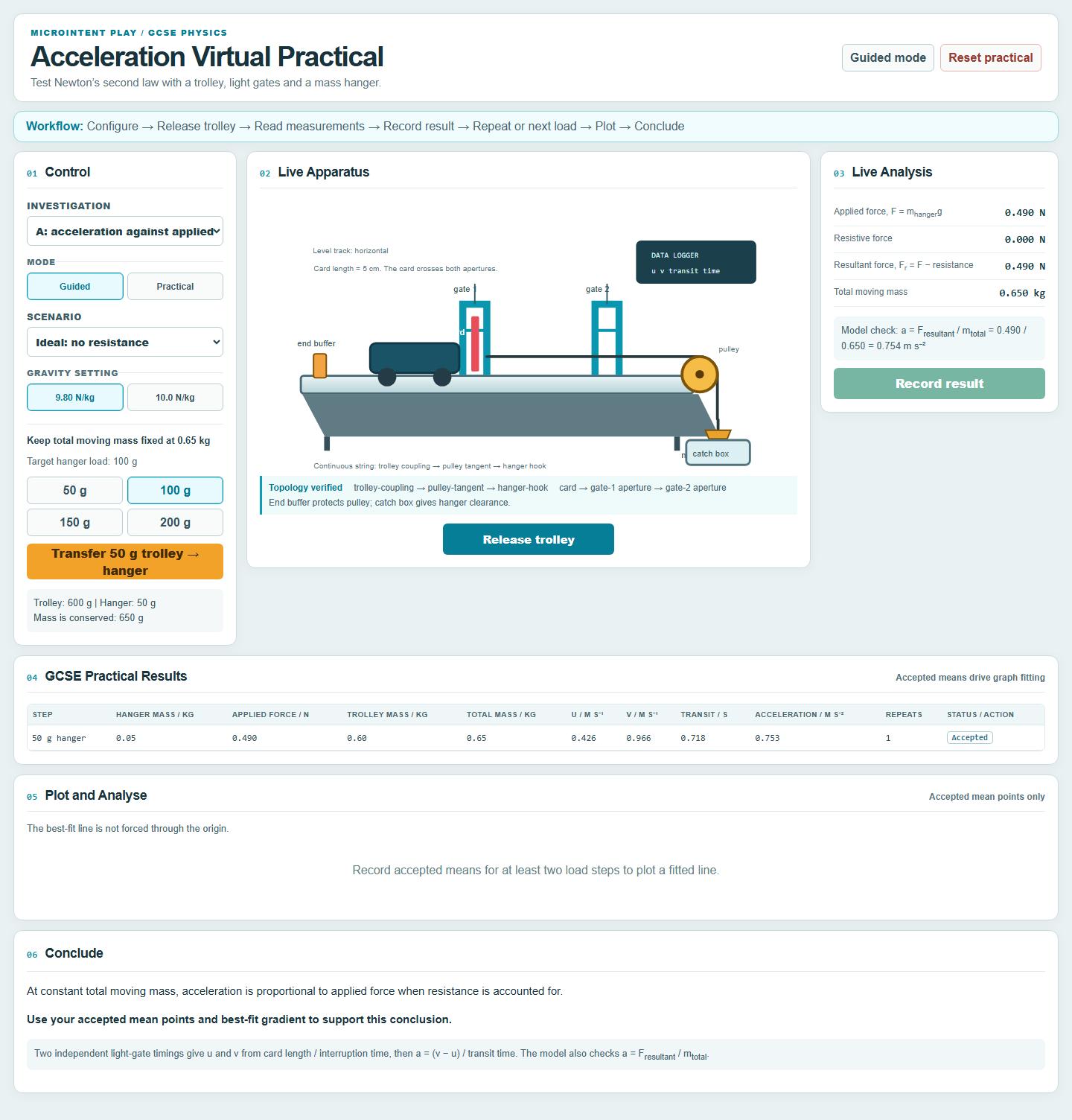
Investigate resultant force, mass and acceleration using a level track, trolley, light gates and mass hanger.
The workflow
The apparatus changes. The habits do not.
Identify the variables and check the apparatus before taking a reading.
Read at eye level, take repeats and record the values with units.
Plot the evidence, use the gradient and state a conclusion that fits the data.
For teachers
Preview the method, rehearse the measurement decisions, or revisit the analysis when apparatus time is limited. The virtual practical does not replace hands-on work; it makes the thinking visible.
All six practicals are free and run locally in the browser.