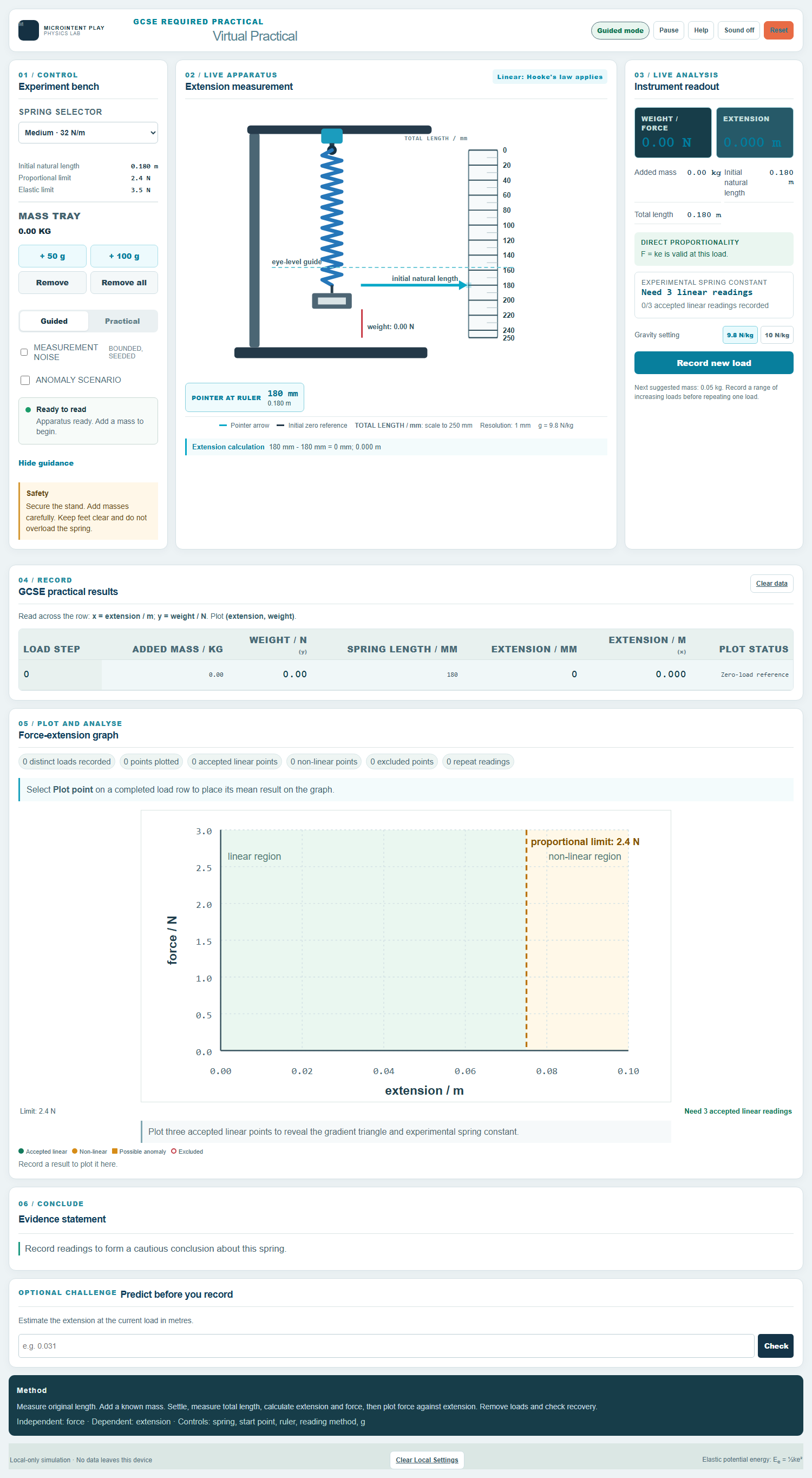
Hooke's Law Virtual Practical
Operate a virtual spring experiment, collect load-by-load measurements, plot a force-extension graph and calculate the spring constant.
- Force, weight and extension
- Hooke's law
- Required-practical measurements
Free GCSE Physics virtual practicals
Seven browser-based practicals for the physics that is hard to see: forces, resistance, circuits, characteristics, heat, density and acceleration. Measure, record, graph and conclude.
No account. No download. Runs locally in the browser.
Virtual practicals
Physics Simulations are now organised as Virtual Practicals. Each one follows the same cycle: set up, measure, record, graph, conclude.
Operate a virtual spring experiment, collect load-by-load measurements, plot a force-extension graph and calculate the spring constant.
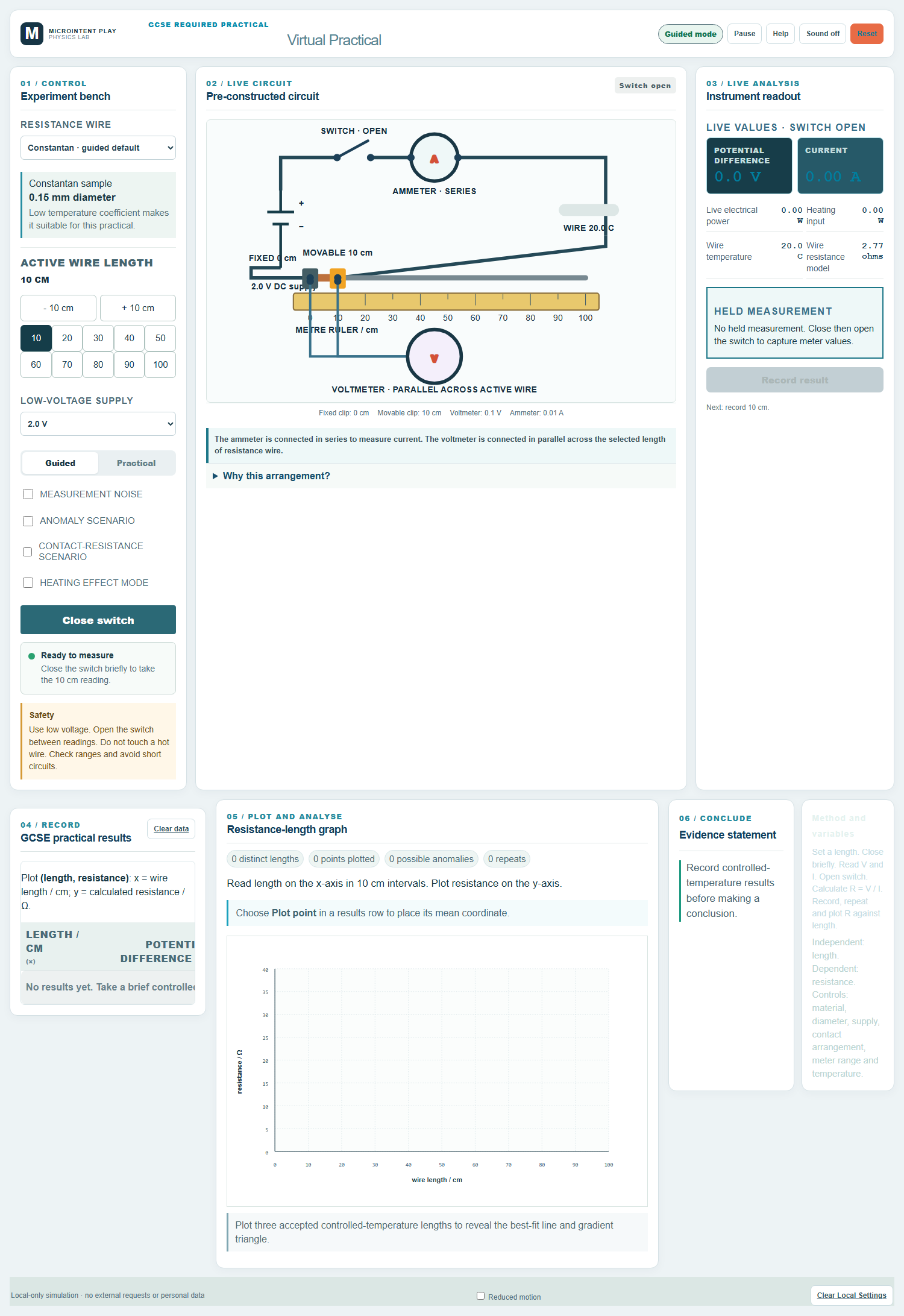
Investigate how the resistance of a wire changes with length using a pre-constructed circuit, real meter readings and a full results-to-graph workflow.
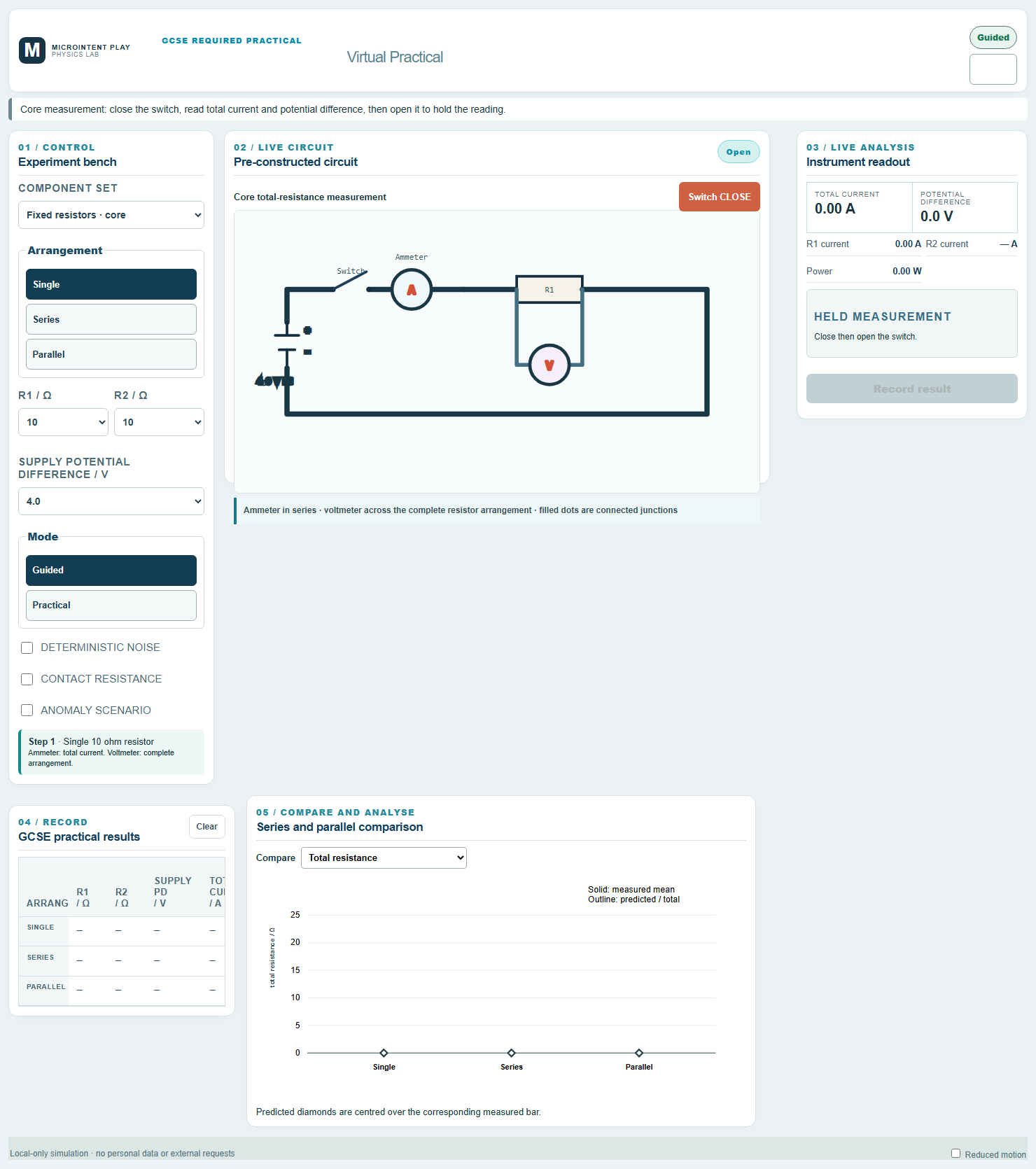
Build evidence from single, series and parallel circuits by comparing current, potential difference and total resistance.
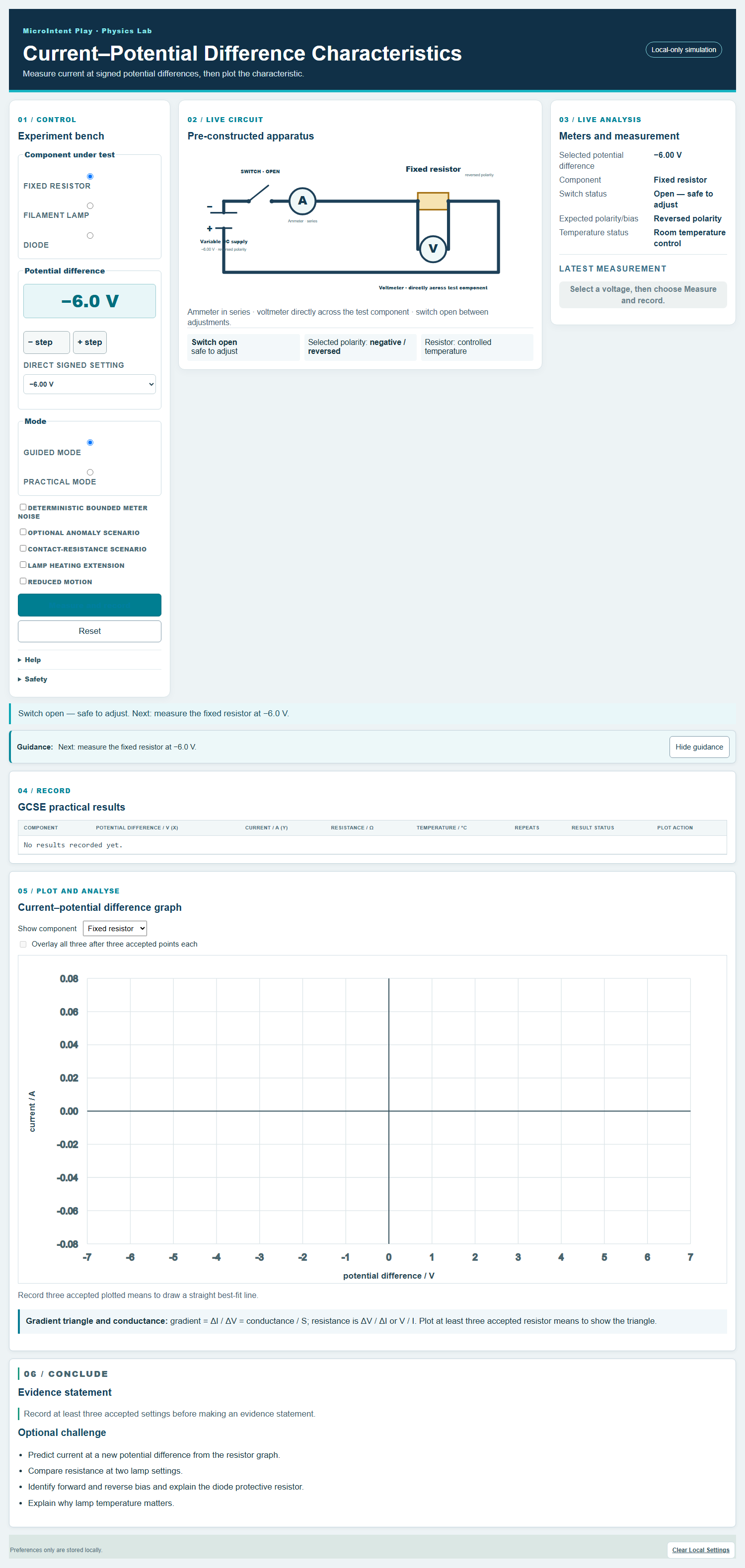
Measure and plot current–potential difference characteristics for a fixed resistor, filament lamp and diode using a correctly connected circuit.
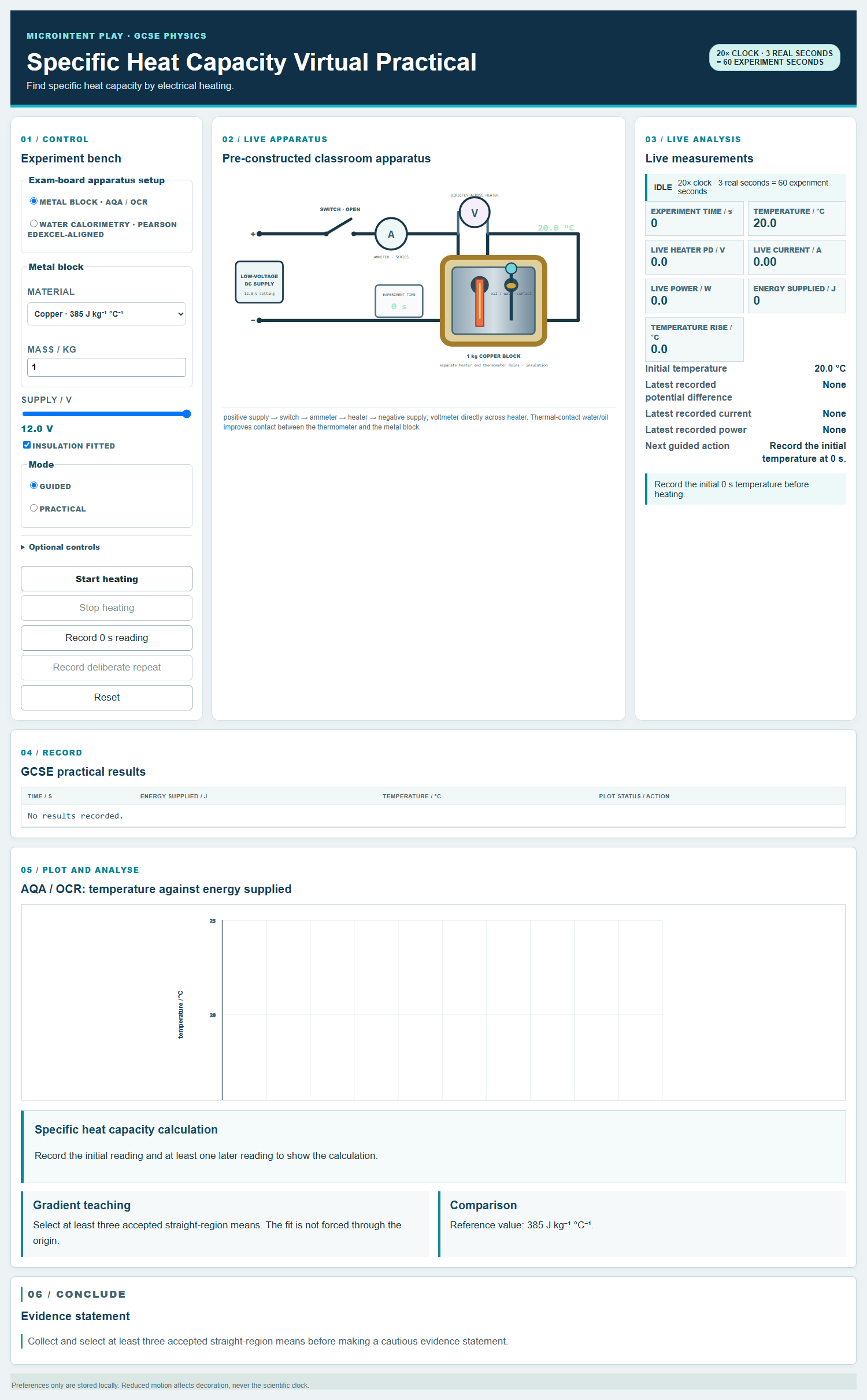
Heat a metal block or insulated water calorimeter, record electrical energy and temperature change, and determine specific heat capacity from a graph.
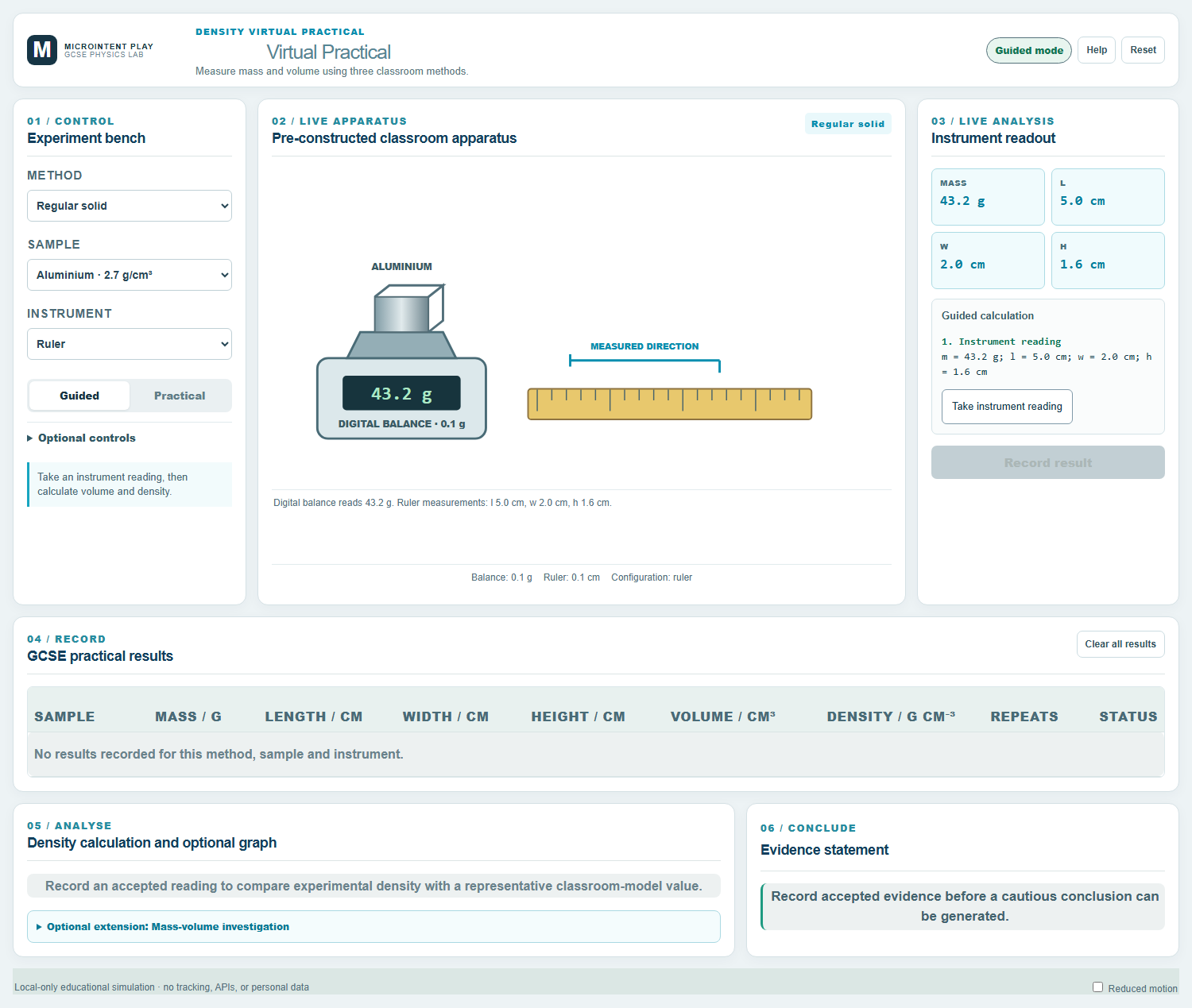
Measure mass and volume using regular solids, water displacement and mass difference, then calculate density from your results.
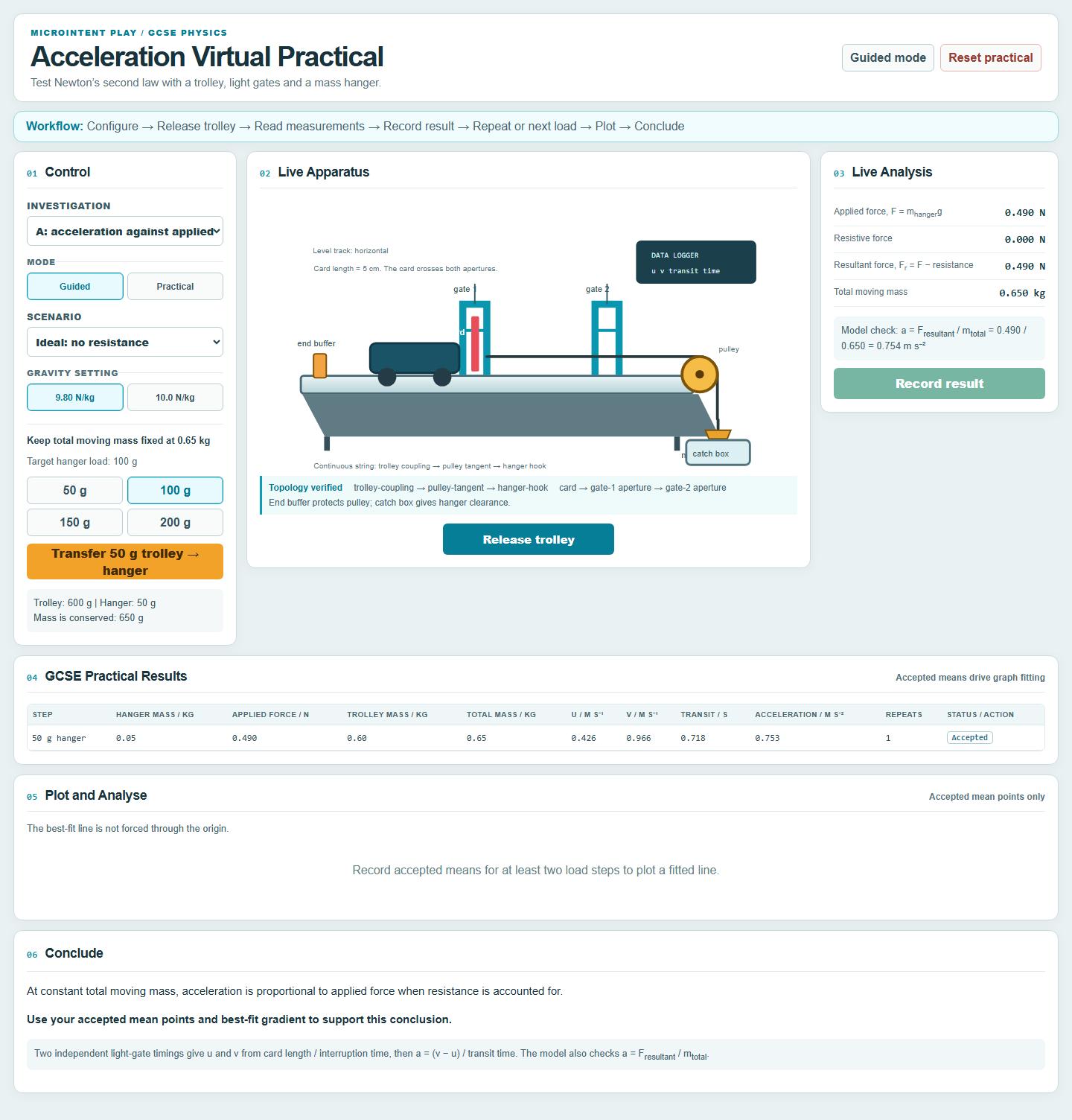
Investigate resultant force, mass and acceleration using a level track, trolley, light gates and mass hanger.
Why practicals first
The dashboard is not decoration. It is the apparatus, the results table and the graph, working together.
Decide what changes, what stays the same and what is measured. The practical makes those decisions visible.
Read meters and scales, take repeats, exclude anomalies and keep a results table that can be checked.
Plot the graph, calculate the gradient and state what the evidence does and does not support.
Built for the classroom
Guided mode checks the calculation and keeps the sequence clear. Practical mode asks learners to read the apparatus and record the result themselves. Both modes use the same scientific model.
Teacher resources
Every practical page includes objectives, apparatus, safety, method, equations, analysis prompts and common misconceptions. Printable worksheet packs are in preparation; no purchase link will appear until a resource is published and checked.
Optional educational games
Games are a secondary layer: one idea at a time, with immediate feedback. Use a virtual practical when learners need to measure, record, graph and conclude.
How it works
Choose the practical, read the apparatus and identify the independent, dependent and control variables.
Use guided mode to check the method or practical mode to read the apparatus yourself. Repeats and anomalies stay visible.
Plot the evidence, calculate the gradient and write a conclusion that distinguishes what the data support from what they do not.
Every virtual practical is free, runs in the browser and keeps the science in charge.